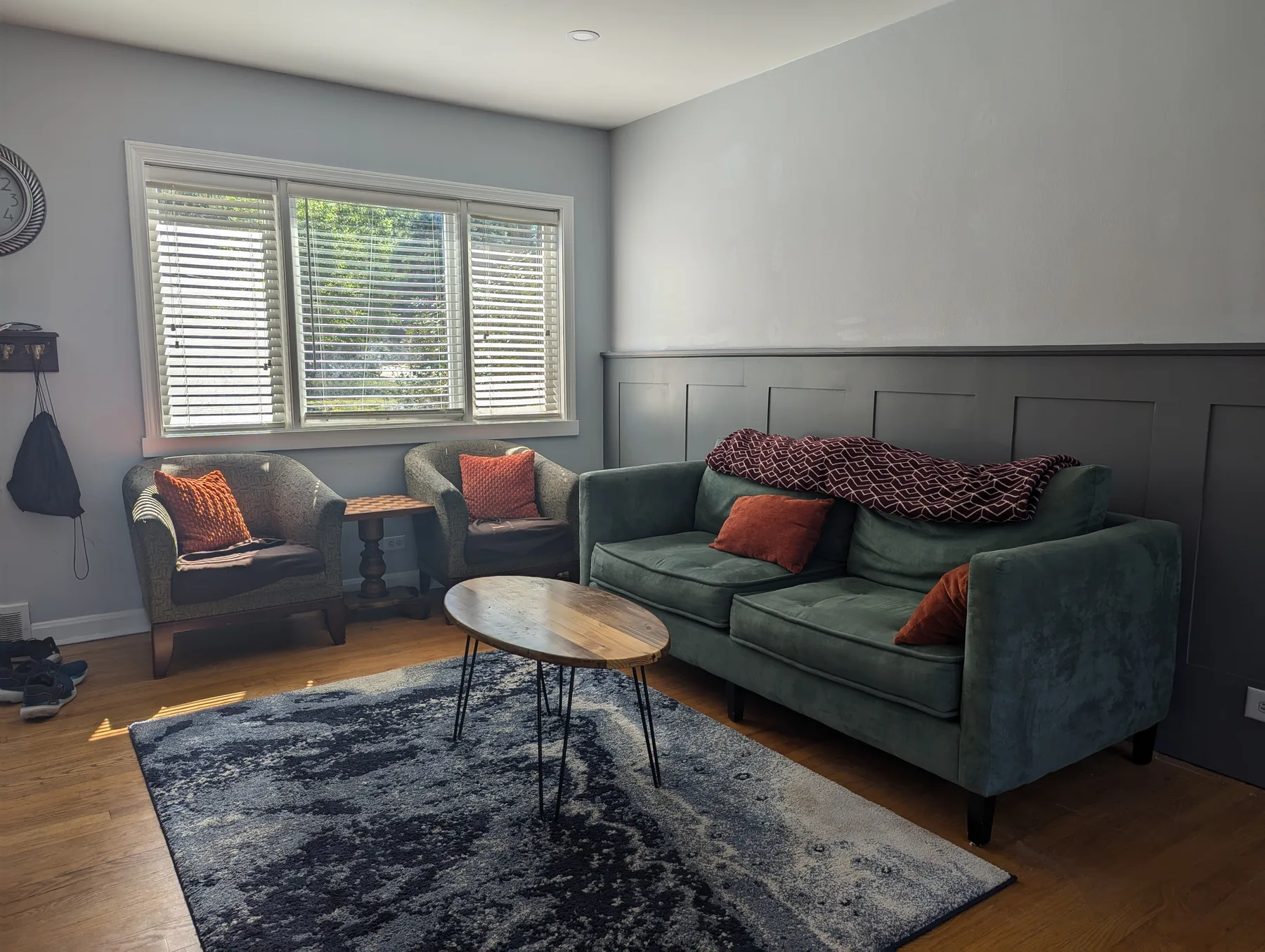
The furniture arrangement made sense. The television belonged on one wall, and the couch worked best opposite it. In a small living room with windows limiting the alternatives, moving the furniture again would have traded one awkward arrangement for another.
Behind the couch was a fireplace that was already out of service. Removing the mantel and painting had helped, but exposed brick remained. The room still looked as though the furniture was working around something unfinished.
A paneled wall gave that existing layout a finished setting.
Build from the surface that is actually there
The brick projected beyond the surrounding wall. Attaching flat panels directly to that surface would not have produced the continuous face the room needed.
Handyman Harman built a shallow frame around and over the retired fireplace. It brought the panel surface forward enough to clear the projection while keeping the treatment compact. In a room where usable floor space already mattered, unnecessary depth would have worked against the project.
MDF panels covered the frame, with added panel details giving the wall its rhythm and depth. The layout was worked around the available material and the proportions of the wall.
That framing is hidden in the finished room, but it established the surface the rest of the work depended on.
Check the joints after the primer
The intended finish was a smooth painted surface. Visible seams would have interrupted it.
The joints were filled and sanded, then the wall was primed. Primer made remaining imperfections easier to see. That led to another inspection, more filling where it was needed, and another sanding pass before the final finish.
The sequence mattered because the first apparently smooth surface was not the last opportunity to improve it. Looking again after priming gave the joints another check while corrections were still straightforward to make.
A darker gray gave the paneling some presence against the lighter walls. A small picture rail along the top added a useful place for photographs and keepsakes.
Let the furniture stay where it works
When the furniture went back, the couch and television kept their positions. The room's useful arrangement had been preserved, and the wall behind the couch now read as a finished part of it.
The picture rail helped complete that change. It gave personal objects a place within the woodwork, bringing the wall into everyday use.