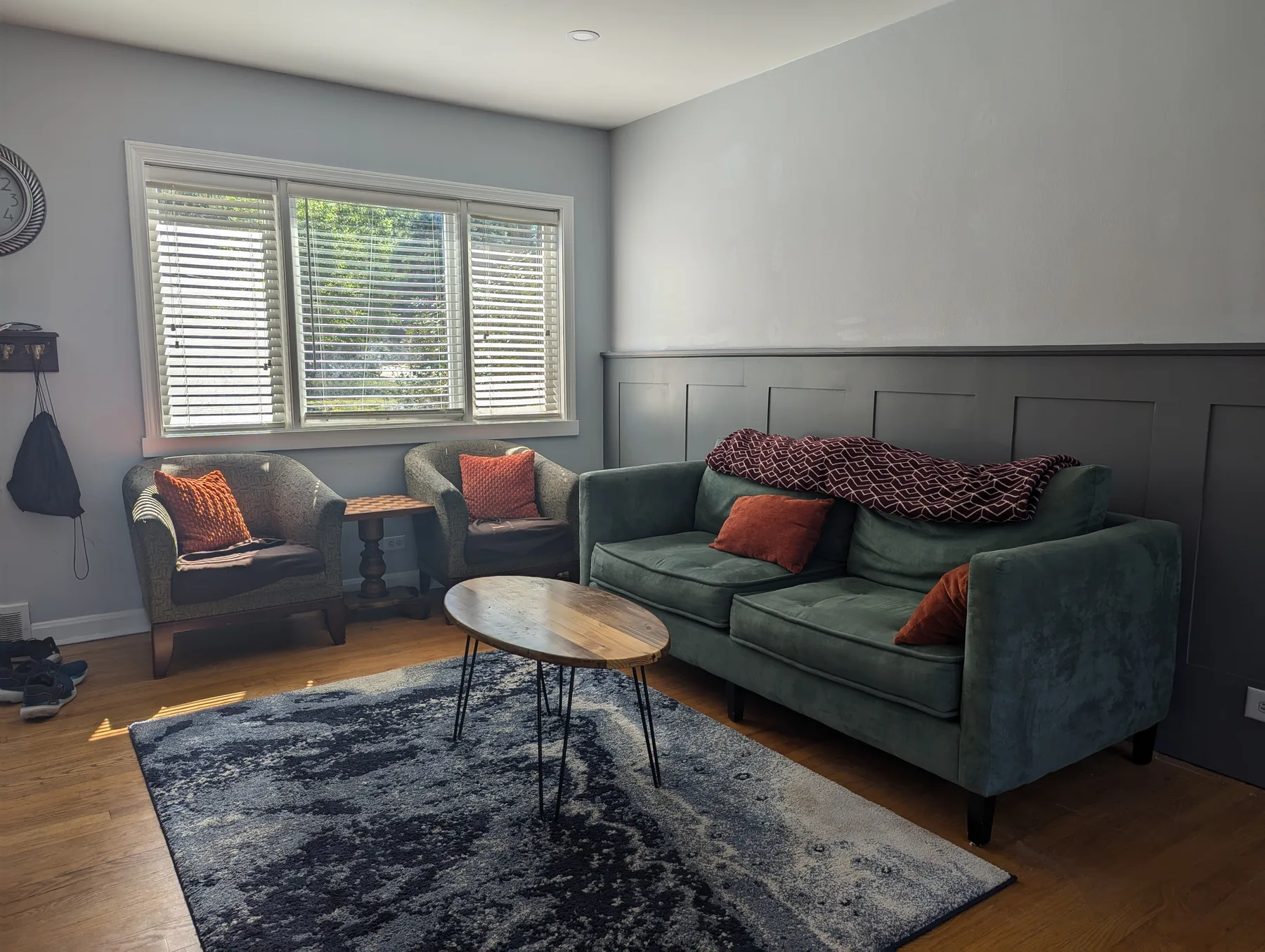
The corner had the best morning light in the house. For a while, a plant made use of it. Later, a bench became a place to put things that had nowhere else to go.
It was an awkward little space: too small for a dining table, but large enough to suggest that something useful could happen there. The built-in began with a simple aim. Leave room for a comfortable chair, with books close enough to reach.
Start with the way the corner will be used
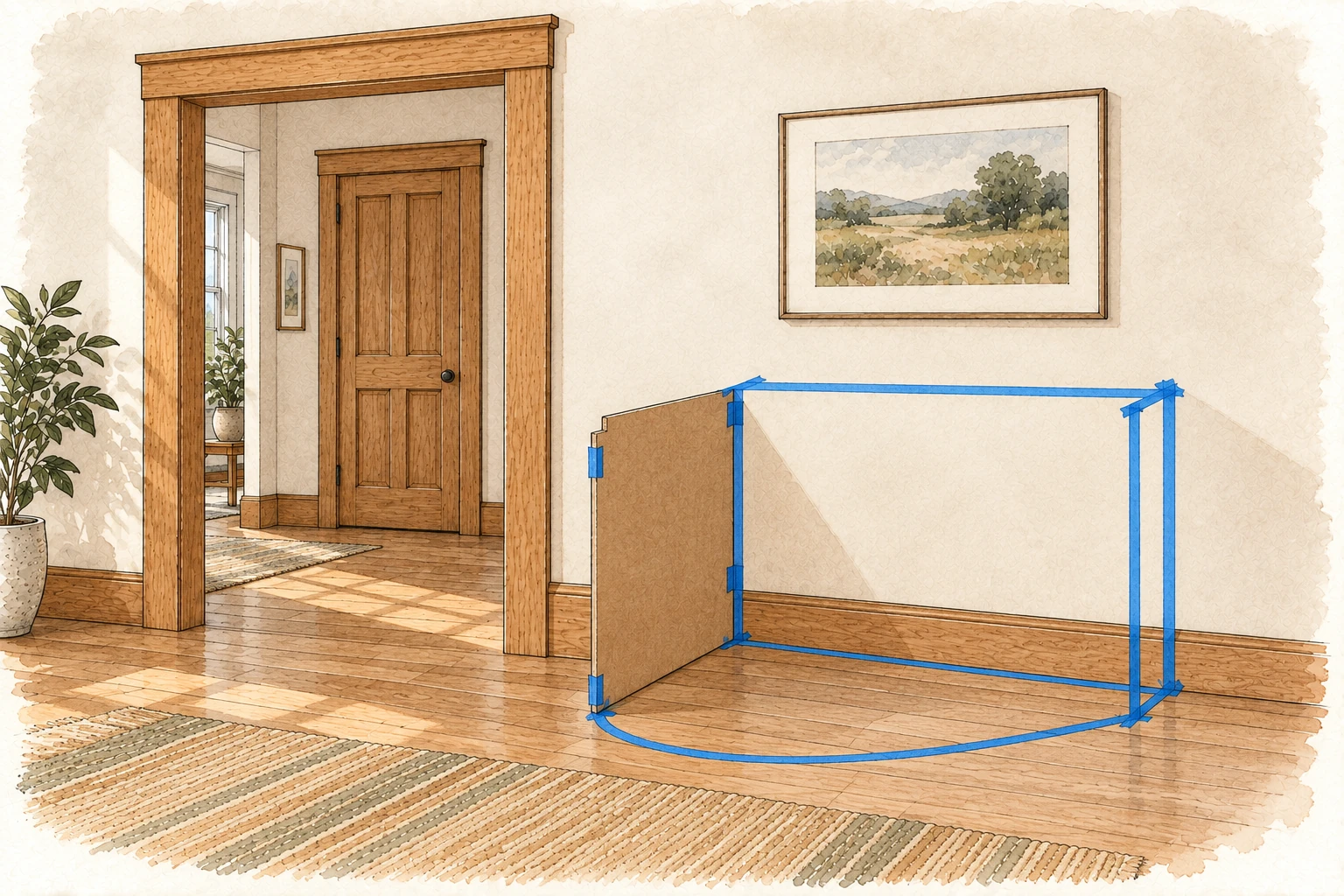
A ready-made bookshelf was a poor fit for the available space. Its size and proportions would have determined what was left for the chair. Fitted shelves let the room and its intended use set the shape instead.
That changed the brief. This was a place to read in the morning, listen to records, look out of the windows, or just sit. Storage had to support those uses while leaving enough of the corner to enjoy them.
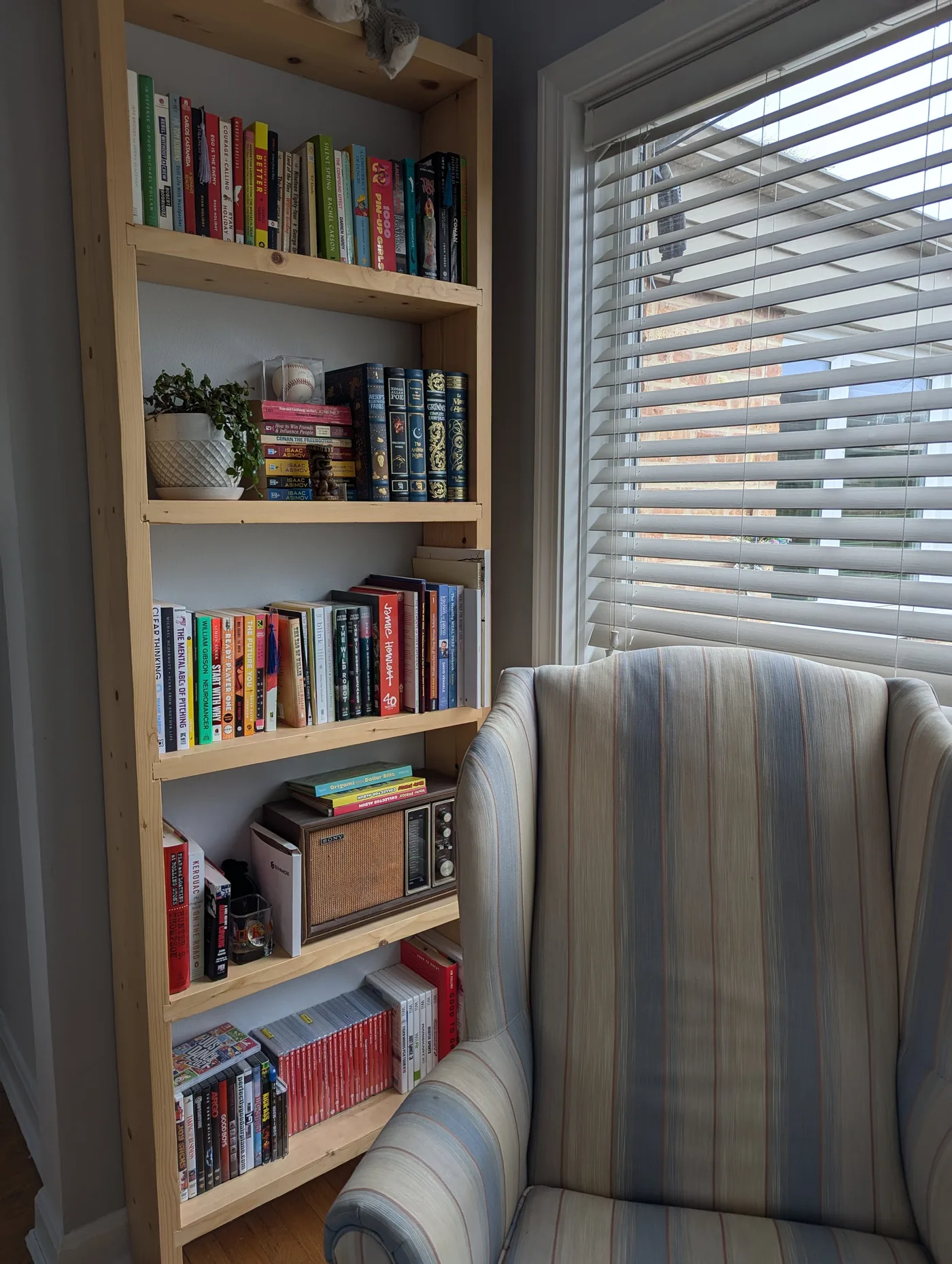
The shelves brought books and smaller plants into the space around the chair. The light that had once served one large plant could now reach several smaller ones, without the plant taking over the corner.
Keep the wood's character
Construction lumber suited the rustic feel of the piece. The boards were planed to improve the working surfaces, while keeping knots and other natural irregularities visible. Those details belonged with the straightforward shape of the shelving and the daylight beside it.
The construction followed the same approach. Matching angled cuts joined the shelves and uprights, with wooden pegs keeping the shelves from sliding forward or backward. Wood joinery took the place of metal hardware.
A matte water-based clear coat finished the wood without adding a glossy surface. Maintenance mattered, too. Shelves full of books are something to live with, and emptying them for future finish care is part of the choice between finishes.
Make the place worth using
Once the nook was finished, the chair got regular use. Sometimes that meant reading or listening to records. Sometimes it meant sitting and looking out of the windows.
The useful change was in how the corner became part of the day. Books, plants, and the chair could share the space, with each given room to do its job.
What had been somewhere to pile things became somewhere to spend time.