Before choosing the details of a new cabinet, look at the woodwork already in the room.
A broad, flat window casing, a narrow molded baseboard, and the panels of a door each give the eye something different to follow. A cabinet will sit among those things. Its frames, doors, edges, and position become part of the same view.
Noticing what is already there makes the next design conversation more specific.
Ordinary details can matter
The National Park Service's Preservation Brief 18, written by H. Ward Jandl, discusses the elements that give historic interiors their character. Its examples include a modest worker's house whose wide baseboards, flat window trim, and four-panel door contribute to the room.
That example is useful because the features are ordinary. Elaborate carving and expensive materials are not the only details worth seeing and keeping.
The brief concerns historic-building rehabilitation. Its attention to ordinary details also offers a useful starting point for considering new woodwork in an existing room.
Find the room's existing vocabulary
Look at the width and shape of the trim. Notice where edges line up, how much space surrounds an opening, and whether the existing surfaces are painted or left as visible wood.
Those observations can inform several choices. Broad, simple trim might sit comfortably beside wider cabinet frames and plain fronts. A room with smaller, more detailed profiles may suggest a different scale. Existing door panels can offer a useful comparison when considering the size and spacing of new ones.
These are possibilities to examine in the actual room. They are not a requirement to copy every profile or make new work look old.
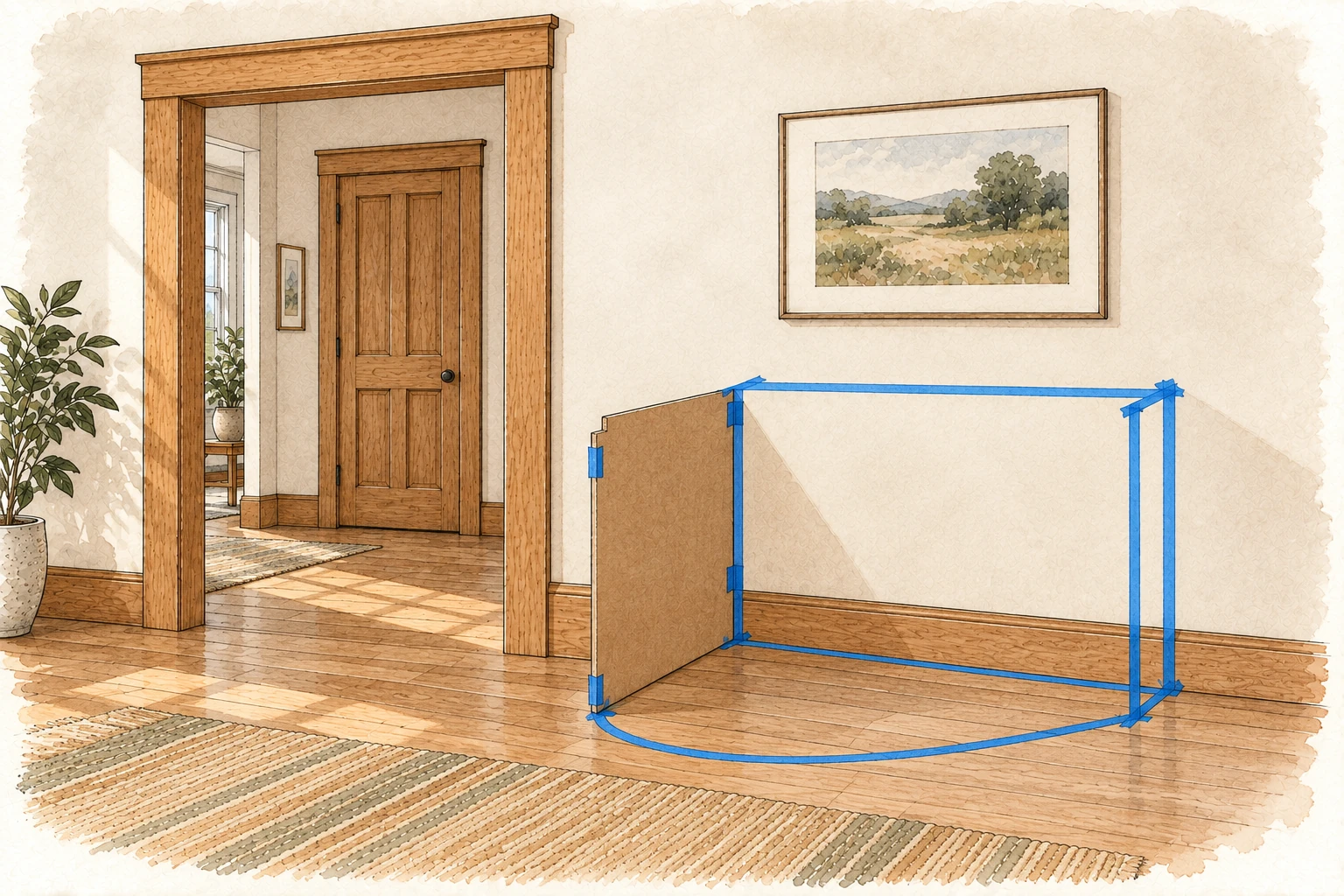
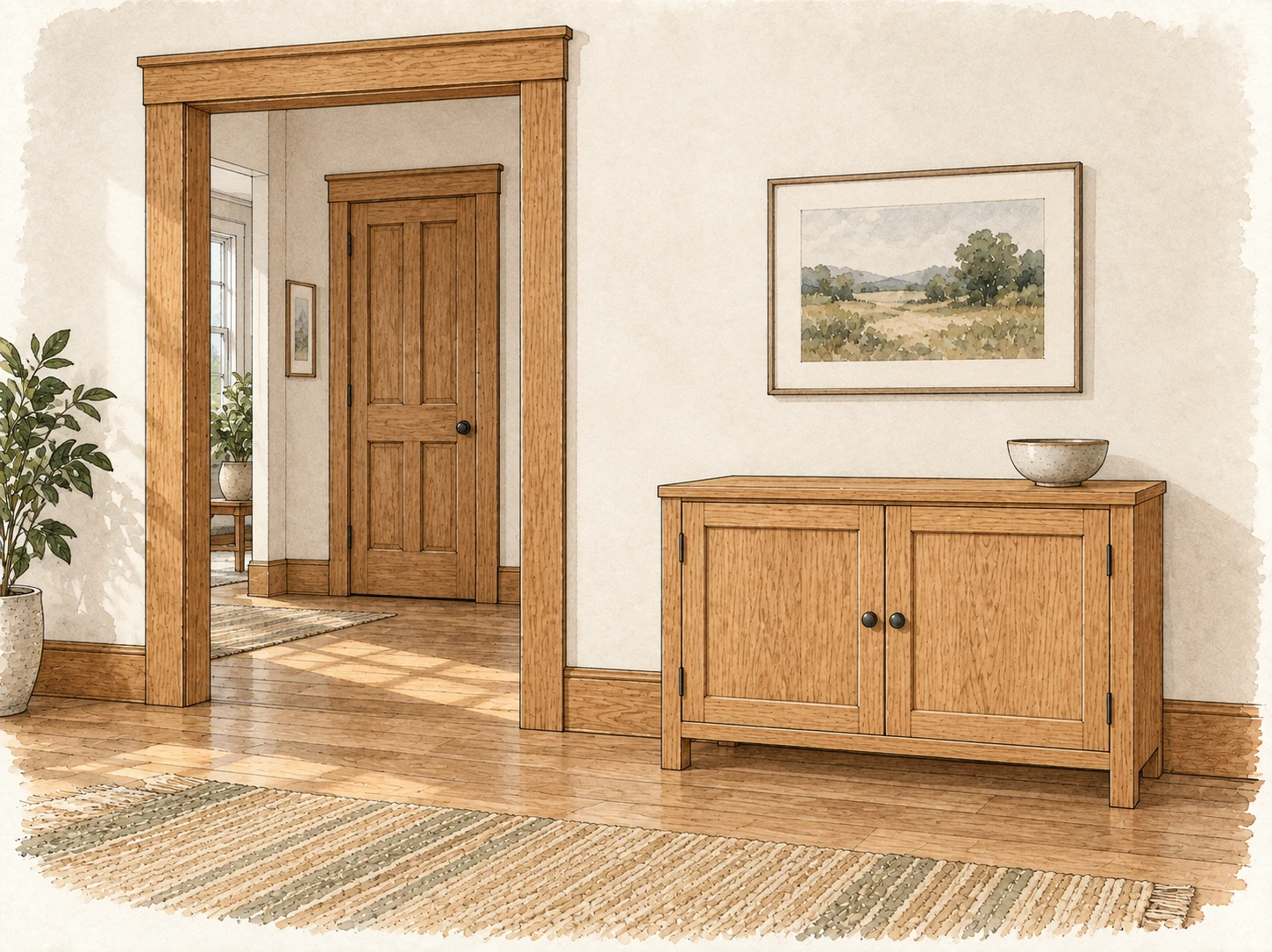
Placement deserves the same attention. A cabinet can fit within the available wall width and still crowd a doorway's casing. Leaving existing woodwork visible may change the width, offset, or edge treatment of the new piece.
Decide what should stay visible
Pick out two or three details that give the room its character. Photographs and measurements can help keep them in the discussion as the design develops.
Then consider the new piece alongside them: its overall size, how much visual weight its frames carry, where its doors divide, and how it meets the surrounding wall.
A new cabinet can have its own purpose and character while responding to the room around it. The existing woodwork gives the design something concrete to work with.